Most apps hand you the same workout whether you slept eight hours or four. These two check first — then tell you exactly what they changed, and why.
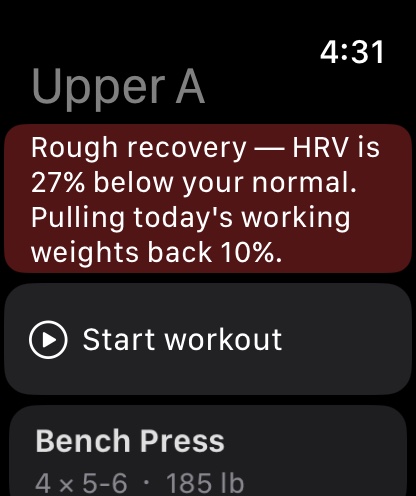
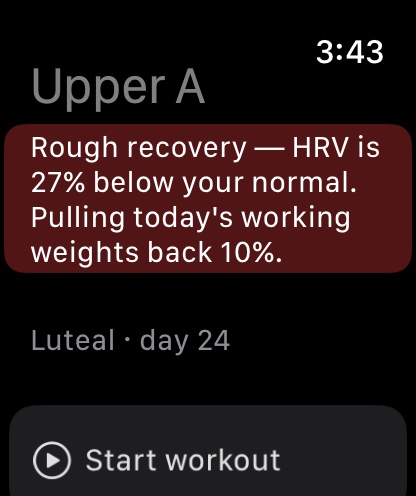
HRV is 27% below your normal, resting heart rate is up 7 bpm and you slept 5h. Pulling today's working weights back 10%. Earn it back tomorrow.
Your watch, ring or band writes HRV, resting heart rate and sleep into Apple Health. Built and Shaped read them against your baseline — never a population average — and adjust the day before you touch a bar.
“Pulling today's working weights back 10%. Earn it back tomorrow.”
No baseline yet? It changes nothing and says nothing. A new user is never punished for data the app doesn't have.
Most apps hand a woman the men's program with the numbers scaled down. That's not coaching, it's arithmetic. These two differ where bodies actually differ.
Strength work that keeps moving when your recovery does.
Everything in Built, plus the thing nearly every other app ignores.
Your numbers flow in through Apple Health — weight, sleep, heart rate, calorie burn — read from whatever your watch, ring or scale already writes there. Nothing new to buy, nothing to re-log.
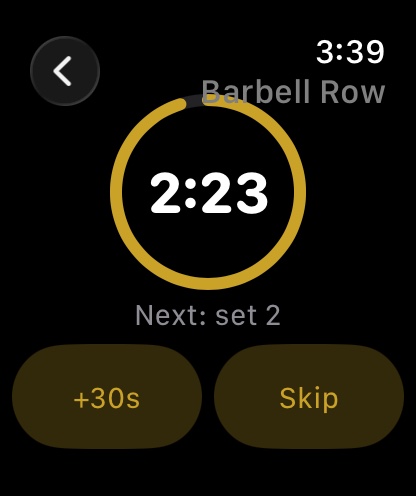
Log sets from the wrist and let the haptic rest timer tap you when it's time to lift again — the phone stays in the bag. And the coaching comes with it: HRV down, sleep short — today's weights come down, and it tells you why.
The workout apps build you a session and stop at the gym door. The cycle apps track your phase and leave the training to you. You end up paying two subscriptions and still doing your own macros.
Swipe the table sideways to see all three →
| What you actually need | Built & Shaped | Workout generators Fitbod, JuggernautAI, Dr. Muscle |
Cycle apps Wild.AI, FitrWoman |
|---|---|---|---|
| Training that adapts to your recovery | ✓ | ✓ | — |
| Calories and macros from real TDEE math | ✓ | — | — |
| Day-by-day meal plans with real portions | ✓ | — | — |
| Bloodwork logged, read and explained | ✓ | — | — |
| Cycle-aware programming | ✓ Shaped | — | ✓ |
| A coach you can ask a question, that's read your logs | ✓ | — | — |
| Your numbers stay on your device | ✓ | — | — |
| What it costs | $12.99/mo · $99/yr | about $10–13/mo | separate subscription |
Category comparison as of August 2026, based on each product's own published feature list and pricing. They're good apps — they're just built to do one part of this. The point isn't that they're bad, it's that you're paying for two of them and still doing the math yourself.
Most fitness apps are a data business wearing a coaching costume. This one isn't, and the architecture is the proof rather than the promise.
Your profile, weight history, food logs, lifts and bloodwork live in local storage on your own device — with no server-side copy.
No data brokerage, no advertising pixels following you around, no third party buying your bodyweight trend. There is nothing to sell because we don't hold it.
When you ask your coach something, that conversation goes to the AI and comes back. That's the one thing that leaves, and it's the thing you chose to send.
Not the main event — a bonus for people who already train alongside someone. Partner, spouse, or gym buddy: two separate apps on two phones, each coached to its own numbers, on one bill.
You share a bill, not your data. Each app keeps its person’s weight, logs and coaching on their own phone. The apps don’t connect to each other, so there’s nothing to turn on and nothing to leak.
Coming soon · solo plans $12.99/mo · $99/yr
The Couples plan opens soon: $19.99 a month or $159 a year for two. Leave your email and we’ll tell you when it does.
The early list opens soon. This form doesn’t collect anything yet.
I’m Jason Luker, “Coach Jason”. I’m a mechanic by trade, ASE Master Certified. I’ve run auto repair shops, I own a bar in Ridgecrest, California, and I taught myself to build Built and Shaped from nothing. They’re made for people who work on their feet and don’t have time to waste.
The meal-delivery services in our guides are ones I’ve paid for myself: Factor, Fuel Meals and FlexPro. The numbers come from each brand’s own published labels, and every guide shows its working.
More about Coach Jason → How we choose partners →
App Store · Google Play ·
Straight answers on meal delivery, protein, recovery and bloodwork, built from the brands’ own published numbers. Plus three calculators that run in your browser and send nothing anywhere.

What their own menus say about protein and calories, meal by meal.

How three numbers you already have should change today’s session.

Mifflin-St Jeor, with the formula shown and your numbers in it.
It reads HRV, resting heart rate and sleep from Apple Health and compares them to your trailing baseline, never a population average. Two or more signals off and it trims the day's working weights, then tells you which signals moved and by how much. With no baseline yet it changes nothing and says nothing — you're never punished for data the app doesn't have.
No. Without one you get the same programming, macros, meal plans and coaching — you just don't get the recovery adjustment, because there's nothing to read. If you already wear something that writes to Apple Health, it's used automatically.
It stays on your device. Profile, weight history, food logs, lifts and bloodwork are all stored locally, with no server-side copy. The only thing that leaves is the question you actually ask your coach.
No — and the Couples plan is a bonus, not the point. It's two people on one bill: partners, spouses, friends, siblings, gym buddies. Nobody's asked what they are to each other, and the price is the same either way. It opens soon at $19.99 a month or $159 a year.
Yes. Two on Built, two on Shaped, or one of each. You each pick the app that fits you, on your own phone.
No. You share a bill, not your data. Your data stays on your phone. The two apps don't connect to each other, so nothing you log — bodyweight, measurements, food, lifts — is ever shared with the other person.
Each of you keeps your own app and all its history on your own phone, because that's where it always was. Nothing needs untangling: the only thing you ever shared was the bill.
No. Built and Shaped are natural-first strength and nutrition coaching. There's no performance-enhancing content in either app.
You probably shouldn't switch — you should stop needing two apps. Fitbod is good at building a session, and at $12.99 a month that's all it does. Built is the same price and also sets your calories and macros from real TDEE math, writes the week's meals, reads your bloodwork, and answers questions about your own logs. If a workout generator is genuinely all you want, keep it.
Yes — both apps are on the App Store and Google Play. The Apple Watch app and Apple Health features follow in version 1.1.
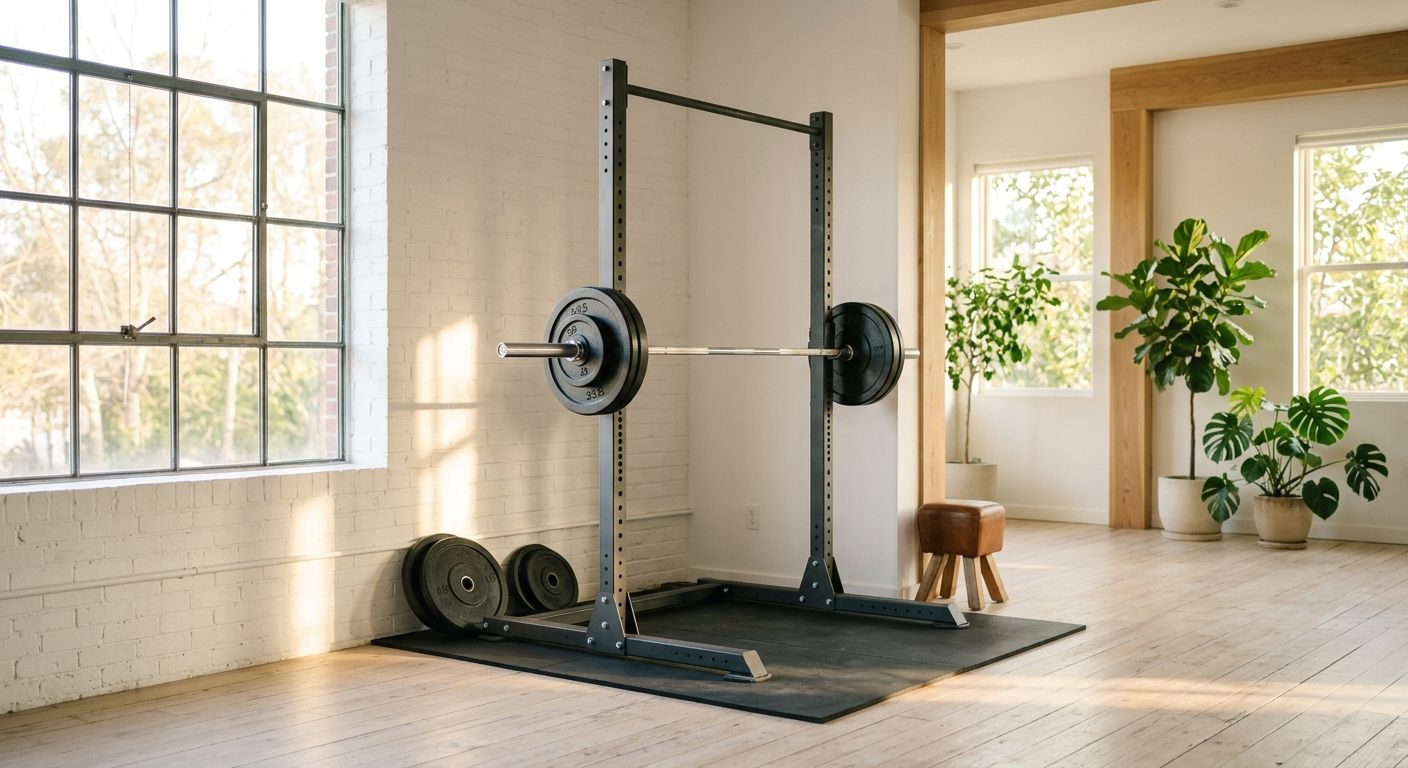
No. Programs are built around the equipment you actually have — full gym, home rack, dumbbells only, or bodyweight.
Free to start, no card to try. Pick the one that fits and it'll ask you the rest.